
Roof Leak Rectification and Water-Damaged Plaster Repairs Melbourne
JT Handyman Solutionz completed roof leak rectification and water-damaged plaster repairs for a government housing property in Melbourne. The roof leak was resealed first to stop further water entry, before the damaged internal ceiling plaster was repaired and made ready for finishing.
1 July 2026 | JT Handyman Solutionz
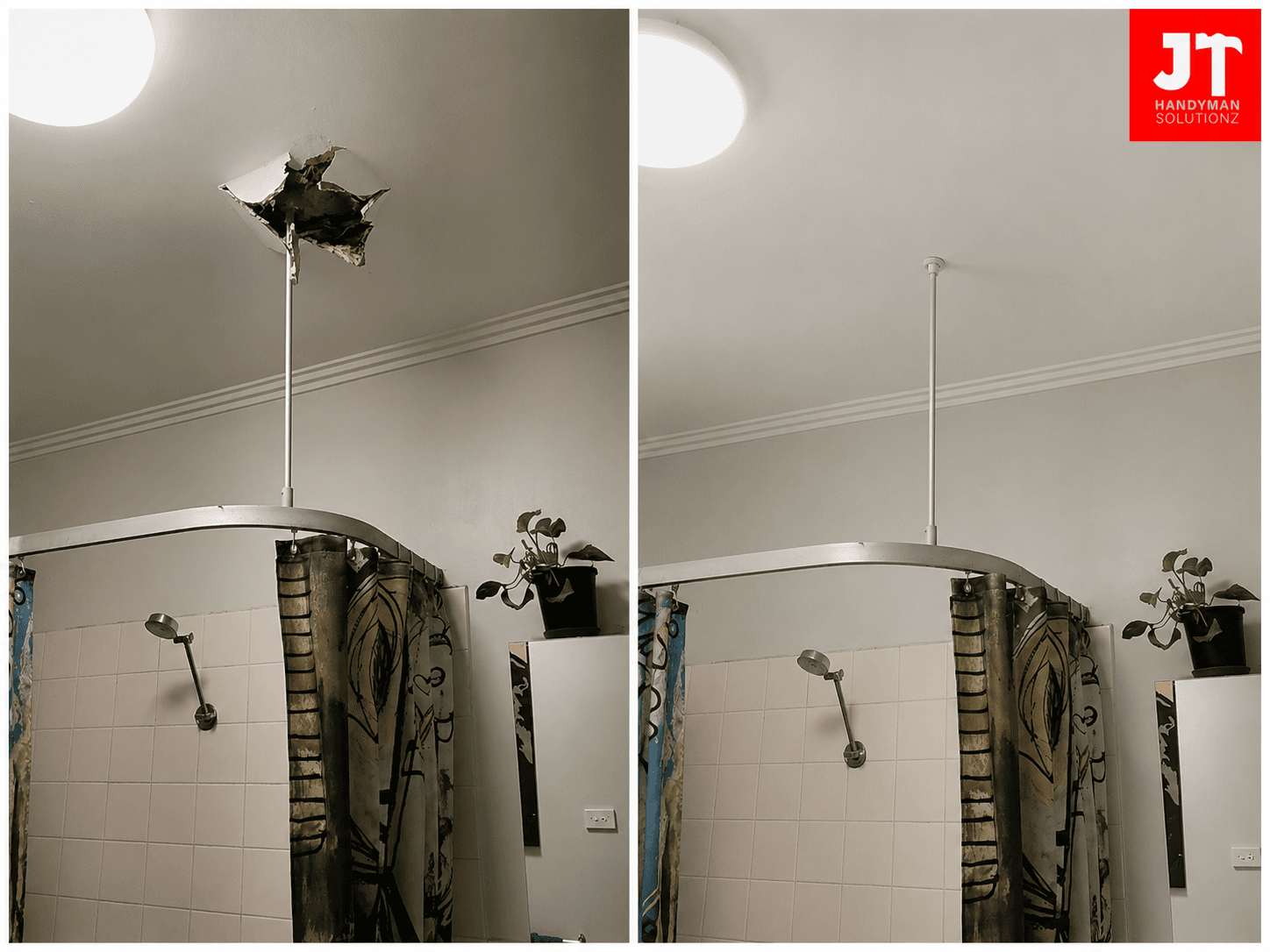
Roof Leak Rectification and Water-Damaged Plaster Repairs in Melbourne
Water damage inside a property is often a sign of a bigger issue. A damaged ceiling or plaster patch may be the visible problem, but the real cause is often a roof leak, failed flashing, damaged sealant, cracked roofing material or water entering through an external junction.
At JT Handyman Solutionz, we recently completed roof leak rectification and plaster repair works for a government housing property where water had entered through the roof and damaged the internal ceiling plaster.
The job involved two key stages:
- Identifying and resealing the roof leak
- Rectifying the internal water-damaged plaster
This is the correct approach. There is no point patching plaster until the source of water entry has been addressed.
Roof leak causing ceiling damage
When water enters through the roof, it can travel through the ceiling cavity before showing signs inside the home.
Common signs include:
- Water stains on the ceiling
- Bubbling or sagging plaster
- Cracked ceiling plaster
- Peeling paint
- Damp patches
- Mould marks
- Soft or weakened plasterboard
- Damage around light fittings or ceiling penetrations
In this case, the property had clear internal plaster damage caused by a roof leak above the affected area.
First step: stop the water entry
Before any plaster repair is completed, the roof leak needs to be rectified.
For this government housing project, our team attended site and resealed the roof leak to help stop further water entering the property.
Depending on the roof and the location of the leak, roof leak rectification may include:
- Resealing roof penetrations
- Resealing flashing areas
- Sealing gaps or failed junctions
- Repairing minor roof defects
- Checking nearby water entry points
- Ensuring the area is watertight before internal repairs begin
Once the leak has been addressed, the internal damage can then be repaired properly.
Second step: repair the water-damaged plaster
After the roof leak was resealed, the next stage was to rectify the damaged plaster.
Water-damaged plaster may need to be:
- Cut out and replaced
- Patched and set
- Reinforced where required
- Sanded and prepared for painting
- Finished neatly to blend with the surrounding ceiling
In some cases, minor water damage can be patched. In other cases, the damaged plasterboard needs to be removed and replaced because it has become soft, swollen, cracked or structurally compromised.
For this job, the damaged ceiling plaster was rectified after the roof leak had been sealed.
Why the source of the leak must be fixed first
One of the biggest mistakes with water-damaged plaster is repairing the ceiling before the leak has been fixed.
If the water entry point is still active, the same damage can return.
That means the property owner may end up paying twice:
- Once to repair the plaster
- Again when the leak causes the same damage later
That is why our process is to first address the cause of the water entry, then complete the internal plaster rectification.
Water-damaged plaster in rental and government housing properties
Water leaks are especially important in rental, social housing and government housing properties because they can affect safety, presentation, tenant comfort and ongoing maintenance costs.
For property managers, housing providers and asset managers, it is important to have clear records of:
- The source of the leak
- The works completed to rectify the leak
- Photos before and after
- Plaster repair works completed
- Any further recommended maintenance
JT Handyman Solutionz provides practical repair support for managed properties, including photos, job notes and completion details where required.
Common causes of water-damaged plaster
Water-damaged plaster can be caused by:
- Roof leaks
- Blocked gutters
- Failed roof flashing
- Cracked roof sealant
- Plumbing leaks
- Bathroom leaks
- Balcony leaks
- Air-conditioning leaks
- Storm damage
- Poor previous repairs
The visible plaster damage is often only the symptom. The key is to find and rectify the cause.
Roof leak and plaster rectification Melbourne
JT Handyman Solutionz assists with roof leak rectification, internal plaster repair and general property maintenance across Melbourne.
Our team can help with:
- Roof leak inspection and minor rectification
- Resealing roof leak areas
- Water-damaged ceiling repairs
- Plaster patching
- Ceiling plaster replacement
- Painting preparation
- Rental property maintenance
- Government and managed housing repairs
- Property manager maintenance works
Need help with water-damaged plaster?
If your property has ceiling damage, water stains or damaged plaster from a roof leak, it is important to deal with the source of the problem before repairing the ceiling.
Send through photos of the roof area, ceiling damage and any visible water marks, and our team can help organise the next step.
JT Handyman Solutionz
Roof Leak Rectification & Water-Damaged Plaster Repairs Melbourne
Phone: 1800 587 659
Email: office@jthandymansolutionz.com